
Not every HVAC problem shows up where you’d expect it. Sometimes the real issue is hiding somewhere no one thinks to look, until it’s been causing damage for years.
That was exactly the case on a recent job that started as a routine inspection and turned into a full mold remediation.
The Discovery
During an inspection, our team identified a serious problem tucked away in a space most homeowners never see: the cavity between the subfloor of the 3rd floor and the ceiling of the 2nd floor. In that hidden gap, we found that the home’s dryer vent had never actually been connected to the outside.
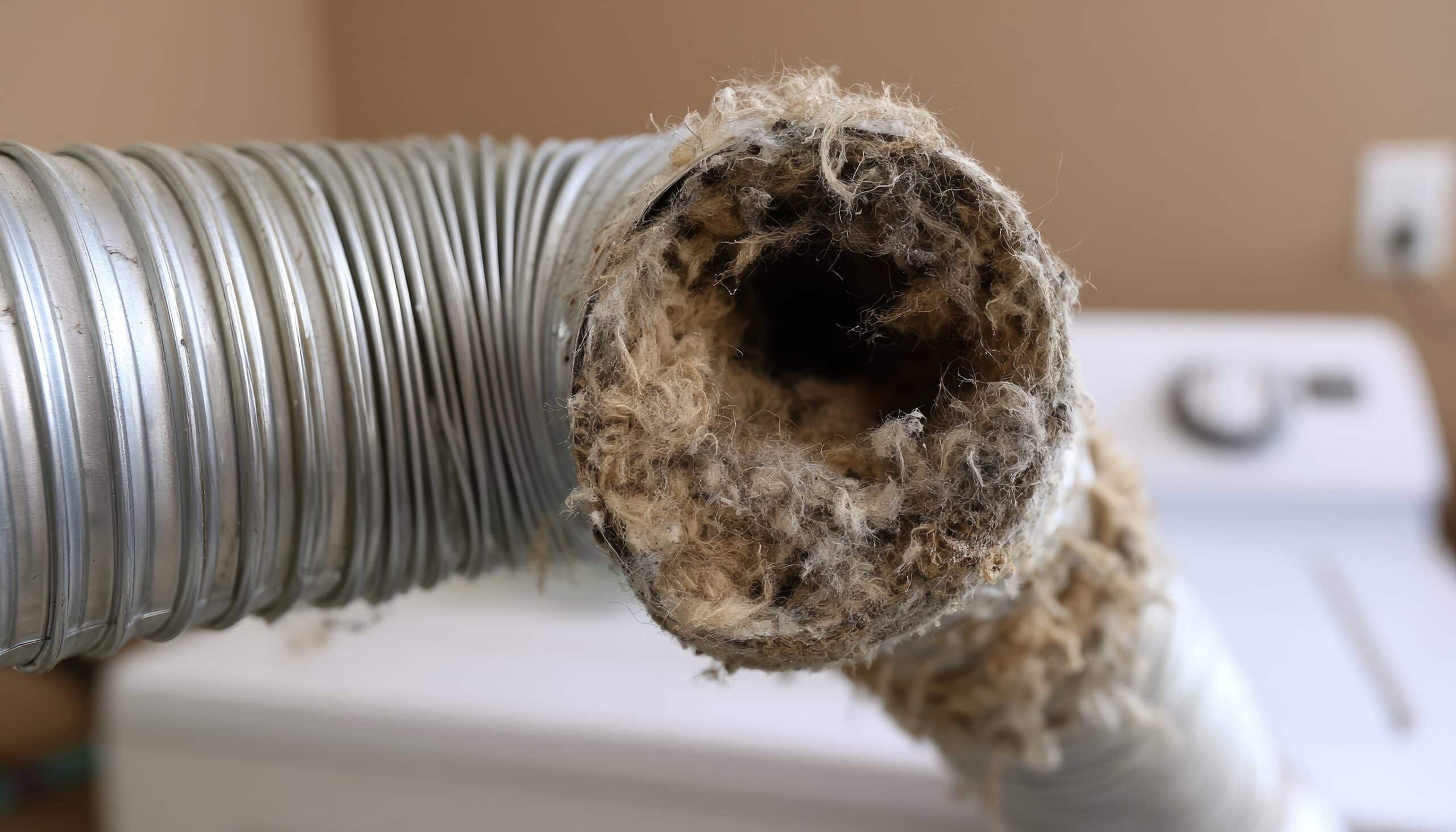
Instead of venting hot, moist air (and all the lint that comes with it) safely out of the home, every single dryer cycle had been pumping that heat and humidity directly into an enclosed space inside the walls.
Why This Matters More Than You’d Think
Over time, that trapped heat and humidity created the perfect environment for biological growth to take hold and spread throughout the surrounding structure. It’s the kind of damage that builds slowly and invisibly, long before anyone notices a smell, a stain, or a health symptom tied back to it.
And the moisture issue wasn’t even the biggest concern. All that trapped lint is a significant fire hazard. Dryer vent fires are a leading cause of house fires nationally, and a vent that’s disconnected or improperly routed is exactly the kind of hidden risk that can go unnoticed for years.
How We Found It
This is a case where the right tools made all the difference. Using thermal imaging technology, our team was able to pinpoint the exact location of the issue behind the wall, without any visible signs on the surface to guide us. Thermal imaging lets us “see” temperature and moisture differences that are completely invisible to the naked eye, which is often the only way to catch a problem like this before it becomes a much bigger (and much more expensive) one.
The Fix: A Multi-Step Process
Once the issue was identified, the real work began:
- Mold Remediation — Our extraction team got to work removing the biological growth from the entire cavity between the floors.
- Treatment — The space was thoroughly cleaned and treated to address the contamination at its source.
- Rebuild — Our build-back team reconstructed the dryer vent and exhaust fan ducting correctly, this time connecting it properly to the outside, after completely cleaning roughly 30 feet of dryer vent ductwork that had never been properly maintained.
What looked at first like it might be a small, contained fix turned into a much bigger project once the wall was opened up and the true scope of the problem was exposed. That’s often how these things go: the visible symptom is rarely the whole story.
The Takeaway
This case is a good reminder that not every HVAC or ventilation issue announces itself with an obvious sign. A dryer vent that was never properly connected can sit quietly for years, slowly creating conditions for mold growth and building up a serious fire hazard, all without a single visible clue.
If your dryer vent hasn’t been inspected in a while, or you’re not entirely sure where it actually terminates, it’s worth having a professional take a look. Catching an issue like this early can save you from a far more invasive (and costly) repair down the road, not to mention protect your home and family from a very real fire risk.
📞 Not sure where your dryer vent actually goes? Give JW East Mechanical a call, we’ll find out, and fix it right.